


1. Tactile gratification
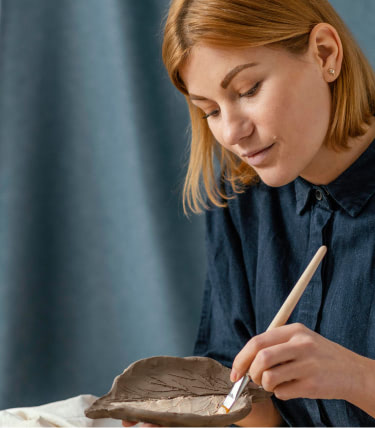
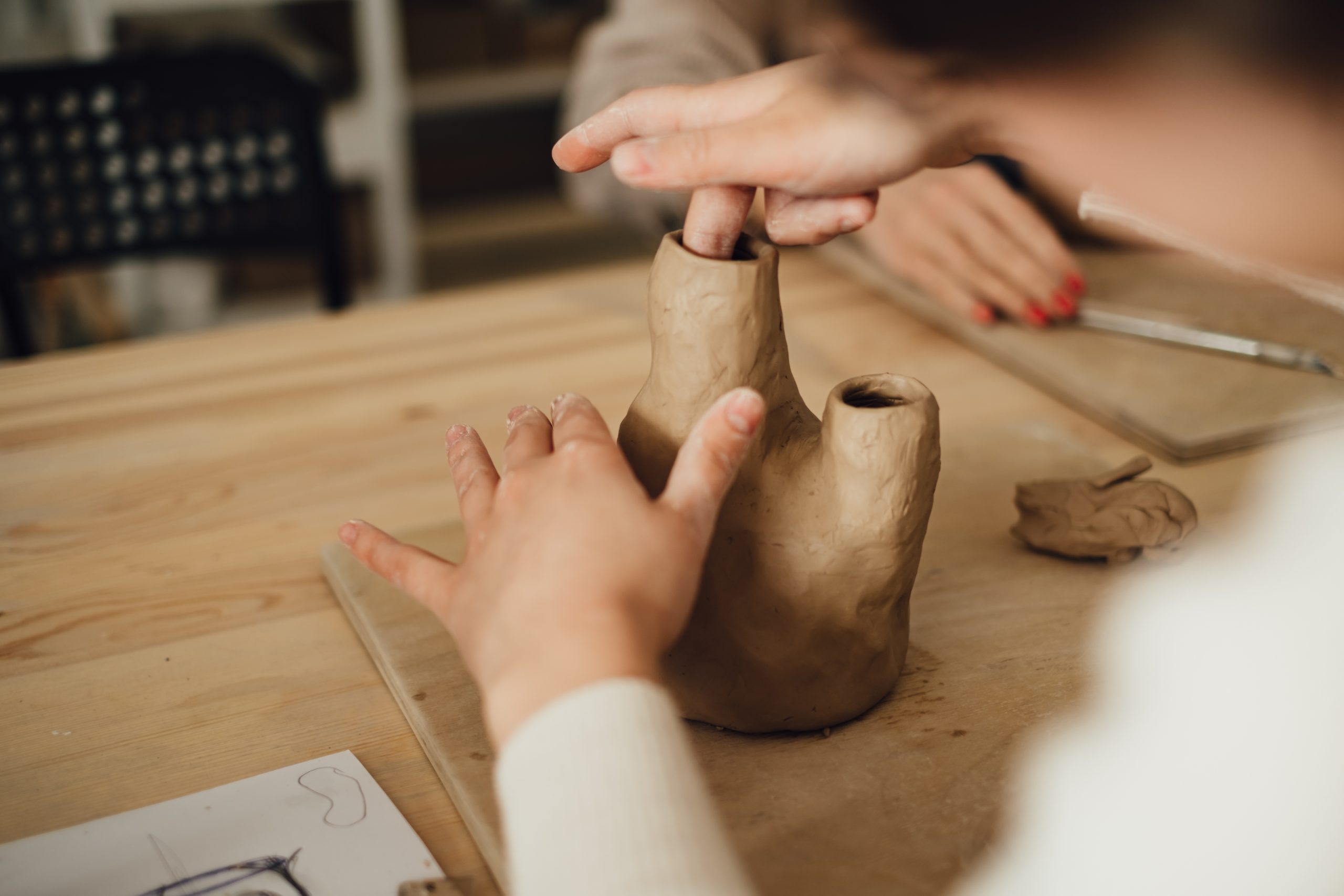
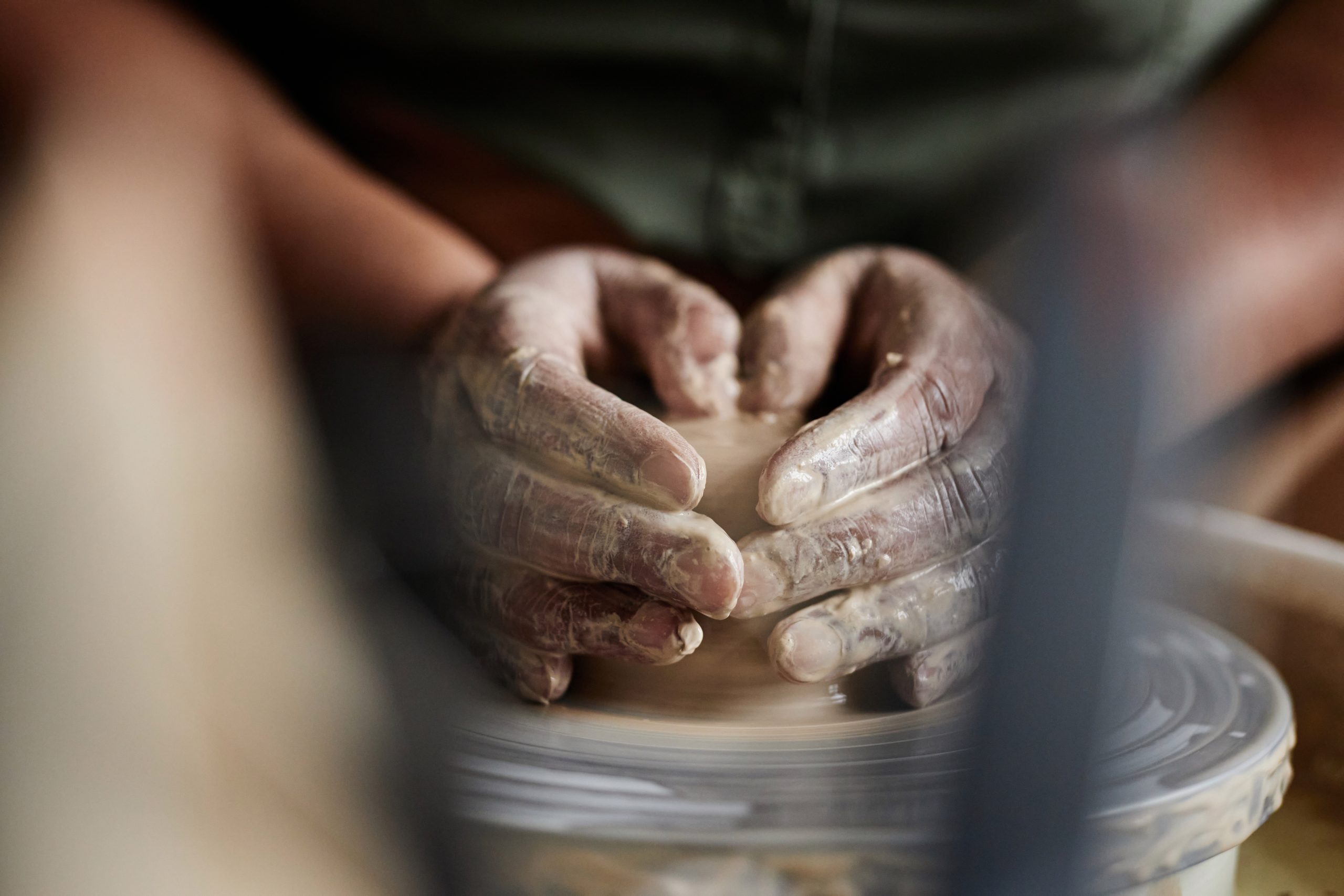
Instead of brushes for painting and pencils for drawing, we use our hands for clay. Tactile contact — the first form of communication we learn as infants — is a very primal mode of expression.
Even a light touch on a lump of clay leaves an imprint. Our ability to make an impact — to transform something — is unmistakable while working with clay. Perhaps in that transformation, we are reshaping grief, guilt, memories. In changing parts of ourselves, we gain a sense of efficacy and of possibility.
2. Holistic experience
Creating with clay is a physical-sensual-mental experience. The physicality and limitless potential for creativity engages our muscles, fine motor skills, vision, and imaginations. We are simultaneously allowing unprocessed feelings to shape the clay while making detailed decisions about which direction we’d like to take our piece.
3. Conscious and unconscious expression
Making art is an extension of ourselves. Through it, both our conscious and unconscious ideas and desires are expressed.
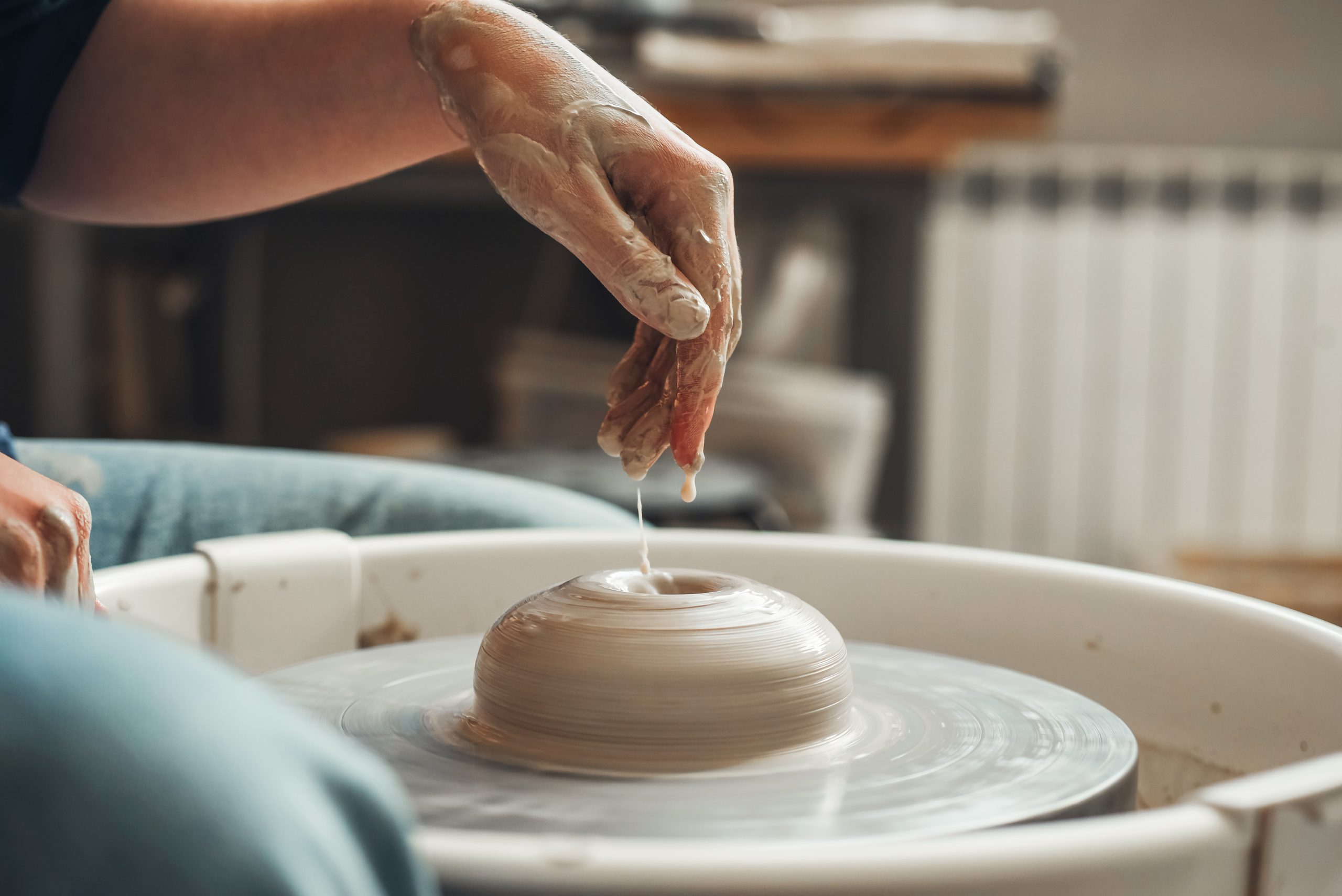
Clay is tangible, changeable, under our control in a world that often feels out of our control. We choose what bowl we want to throw or what body we want to sculpt. We choose to use our clay to send a message about the miracle of pregnancy or the repugnancy of xenophobia and enhance it with markings and colors of our choosing. Through trial and error, we get to know ourselves as an artist and a person.
Yet clay can also serve as a metaphor for our less conscious feelings and inner worlds. Wishes and fears are often found in both the process and product of ceramics. When we can let ourselves go, much like speaking freely in therapy, we make space for our fantasies and pain so they may be transformed into meaningful expression.
4. An antidote to the culture
We live in a culture that idealizes fast, easy and convenient. With the distractions of our devices and running from work to soccer games to meetings and dinners, we’re chronically harried. We wonder why we’re anxious and then seek out quick-fix therapies that often don’t last.
Working with clay means taking your time because the process can’t be rushed. There are about ten steps between preparing the clay and the glaze firing, some that require hours or days in between. If you try to rush it, the clay will make its resentment known by cracking, exploding, or rebelling in some other way.
With clay, we also don’t always get what we want despite the hours of love and labor. We groom and beautify our pieces and pick colors that speak to us, hoping they look as we imagine after firing. And for the lucky or talented, they do. But the rest of us must learn to let go of control and accept imperfection. There’s no merchant to complain to or store to demand a refund.
5. Release of aggression
Had a fight with your spouse? Throw clay hard and repeatedly on the wedging table. Cat peed on your bed…again? Beat the darn clay or cry on it. The thing with clay is you can slam, beat, and even stab it and it’s unlikely to be ruined, at least in its plastic state.
As studio owner Biddle notes, “Even if you let a piece get all the way to completion, you can decide to squash it at any moment, which gives you an in to the creation/destruction impulses in a way that’s safe.”
Even when a piece has been fired, you can take a hammer to it if you don’t want it. It brings enormous satisfaction…or so I’m told.
6. Meditation
Many of the artists I spoke with described clay work as a way to get out of their heads and into their bodies, much like meditation. Most people work alone on a project and there’s a kind of quiet, or flow-state, that comes over the artist as she allows herself to join the clay.
Ms. Blanchard, the psychotherapist, said: “Many of us use the creative space in the studio to balance and neutralize the ways that our careers require more rigid/structured thought. It stretches us in different ways…It’s an extremely zen and meditative experience.”
7. Community
While pottery is usually solitary work, artists often work or take classes side by side at studios and tend to form a community. “The community itself is healing and inspirational,” explains Blanchard.
It becomes a space where smart talk about pop culture, politics, and shitty bosses abounds. More experienced artists often assist newer clay-mates, gaining awareness they have something to offer. There might be wine involved, which is especially lovely when a pottery teacher brings in various cheeses to use as examples of differing clay consistency.
This adult playground is a much-needed reminder that there is more to the world than struggle and suffering. “Connecting with lighthearted, playful experiences is one of the most healing things we can do.”
Conclusion
While writing this piece, I came to see a pattern of duality inherent in clay work. When we touch clay, we’re interacting with the earth, building a relationship with something that’s millions of years old. Yet we’re creating something brand new that has never existed before. Wrestling and joining with that slab of mud forces practitioners to seek the balance between control and unpredictability, seriousness and playfulness, detachment and attachment. The clay transcends into a beautifully finished piece of art and, while we may never be finished (and may still need therapy), we are one step closer to our own transformation.
Source: Jo-Ann Finkelstein, Ph.D.